
Greetings in the Name of the Lord!
A few people have asked me about what the word Veni means. If you are wondering why I have been asked this question, it is because it is part of our congregational response following the prayer of Confession. It is a brief piece of music and the full lyrics are Veni, Veni Emmanuel. These exact words are a reference to Isaiah 7:14 where the coming Messiah is named Emmanuel and these words have been a part of Advent liturgies since at least the 8th century.
What is fun about this specific phrase is that it actually represents two languages. First is Latin, Veni is Latin and it means Come or O Come. Emmanuel on the other hand is a transliteration of Hebrew, and it means "God is with Us". As Christians we interpret Jesus Christ as Emmanuel, so as we move through Advent waiting for the coming of Christ into the world, we are praying for Christ's coming, for the Love of God to be made manifest, and most literally, praying for God to be with us always. Take a moment and meditate on why these words are so meaningful following a confession of sin.
And this is not the only ancient thing about our advent liturgies. Throughout advent I have been using the O Antiphons for the Call to Worship. Interestingly enough Veni, Veni Emmanuel first emerged in relation to the O Antiphons. I have to imagine that you are probably saying to yourself: "that's all well and good pastor, but what the heck are O Antiphons?".
An Antiphon more generally is a response to a prayer, usually associated with a Psalm. If you remember when we have done psalm chanting, there is usually a line that is repeated by the congregation following a few lines from the cantor (which is typically me in our setting). The word antiphon itself comes from Greek and literally means "voiced response". (think "anti" as against or response and "phon" as sound or voice).
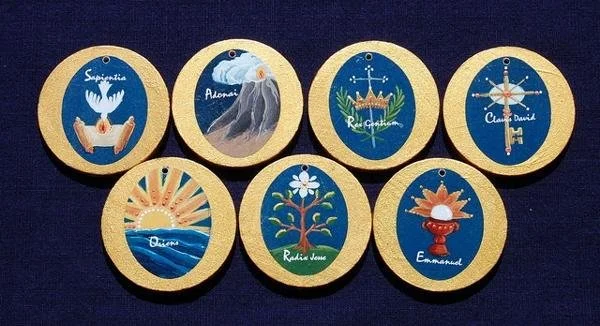
The O Antiphons are something far more specific. They refer to seven short poetic phrases or songs used during daily prayers in the seven days leading up to christmas. These also originate from at least the 8th century (this is the first time they show up in written liturgies, no one is sure how long they were in use before that). Each song or phrase centers around one of seven names used to describe Christ. This set of seven names goes back to at least the 4th century, and more likely as far back as the 1st century! In Latin the seven names are: Sapientia, Adonai, Radix Jesse, Clavis David, Oriens, Rex Gentium and Emmanuel, with all seven referring to a specific Old Testament prophetic text. In English they are: Wisdom, Lord, Root of Jesse, Key of David, Dayspring, King of Nations, God is with us.
Look back at your bulletins from the last two weeks and you will see four of the seven O Antiphons in our call to worship: O Wisdom, O Lord, O Root of Jesse, O Key of David, and you will see two more in this Sunday's worship as well. On the final sunday of advent I am thinking we will do all seven, preparing ourselves for Christmas in ways that echo back to at least the 8th century.
All of this is important because it unites us with all who have come before us. It reminds us that we did not just emerge overnight with fully formed liturgies and rituals. It reminds us of our connection to the past and our responsibility for the future. It reminds us of the great cloud of witnesses that worship with us each Sunday. Faith is intended to be done in community, with connection to the past and hope for the future. We are not the climax of faith, nor are we the first fruits, nor are we the completion of faith either. We are like those that came before us, seeking relationship with God, seeking meaning and a sense of belonging and continuity. and community and hope that can be trusted and Love. We are not alone in our journeys of faith, and we are meant to work together, not only with those that surround us each Sunday and throughout the week, but together with all who surround us from our rich Christian history.
In Peace,
Mike