
Greetings in the Name of the Lord!
We have journeyed together through Lent, exploring some of what was lost during the pandemic. We touched on what it was like to lose a shared sense of time, and predictability and shared public places and even true set aside time for silence as everything merged together, all resulting in disorientation and a sense of being lost in the wilderness. Then we explored all the interrupted rituals and transitions and goodbyes, it piled on as the pandemic went all, it collected within us. Then we explored the fractured relationships and the sense of social patience and gentleness, we lost touch with friends and family, and struggled with intergenerational connections and a common sense of what was good as various tribes emerged, pulling us in. Then we explored the loss of institutional trust, the loss of shared language, of an ability to rest without guilt, of being able to clearly define work and home, and all of it without true communal meaning making, causing further fracturing. And finally we explored the loss of hope and language for grief as we all continue to learn to be together again, even 5 years out from the worst of the quarantining.
All this loss, particularly when we engage in how slowly it overtook us, almost without us even noticing, we can feel it, we can lament, we can mourn. It is important to name and explore, and discuss with loved ones and dear friends and those whom we trust most deeply.
It can feel overwhelming, and in the midst of a culture of self-help and DIY and a pull yourself up by your bootstraps kind of mentality, we expect that we will be able to fix all this on our own. We expect that through hard work and determination, we can heal the rifts and repair the breaches and mend the fences. Yet God does not expect us to fix everything on our own. In fact God knows we can not fix it all on our own.
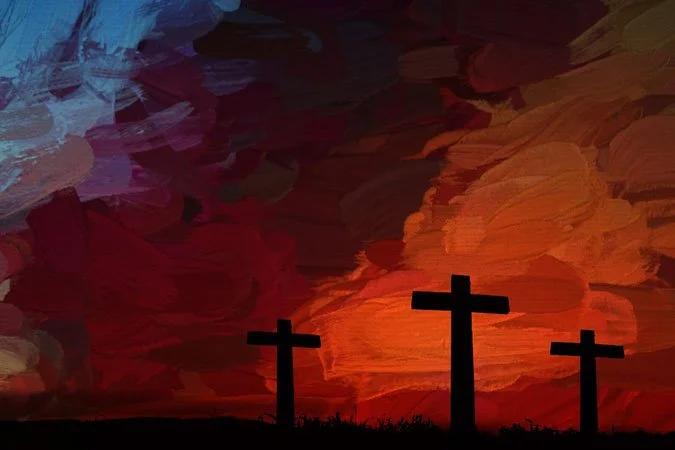
Our journey through Lent will not fix or bring back the things that were lost. Our time of lament will not, on its own, bring us back to some sense of wholeness. Rather, it names what it is we need to pray for. It names the very things we have to bring to God, the things we have to bring to the cross.
We typically don't think like this in our contemporary world, our hyper individualism feeds the false notion of complete self-dependence. But God wants us to think like this. God wants us to learn to risk giving things to the cross, to let them pass away and resurrect themselves as something new, to trust that in the great mystery of the resurrection, God will transform the world in ways we can only imagine.
As we head towards Holy Week, let us collect all those heavy burdens, let us gather our understandings of what was lost, let us acknowledge our deepest laments, and bring them through the drama of Holy Week. Let us bring it all with us as we celebrate the entry of Jesus into Jerusalem on Palm Sunday, let us bring it all with us as we share a meal with friends on Maundy Thursday, let us bring it all with us as we fall asleep in the garden of Gethsemane, even though Christ asks us remain awake. Let us bring it with us as Jesus tells us to put away our swords, and we watch in disbelief as he hands himself over to the authorities. Let us bring it with us as we deny the Lord three times, Let us bring it with us as we watch Jesus carry the cross and endure brutal suffering. Let us bring it with us as we shout: "Crucify Him!". Let us bring it with us as we wept watching Christ take his last breath. Let us bring it with us as we seek refuge in an upper room, lost and dismayed at all that has happened. Let us bring it with us as we prepare to check the tomb on an early Sunday morning.
Let us bring it with us, and give it to God, and see what happens....
In Peace,
Mike