
Greetings in the Name of the Lord,
Throughout Lent we have been exploring some of the things that were lost during COVID. It is a practice of lament, but also of identifying the ways things have changed over the last few years. In many ways things happened all so fast that we have not always been able to name some of those changes, and even just naming them helps us be aware of grief that may be lingering within us. This process has also been an act of prayer, not that our prayers will turn back the clock and bring back the things we lost, but it helps us name what maybe missing and give our trust to God to transform the world towards the beloved community exemplified by the Kingdom of Heaven as presented and modeled by Christ.
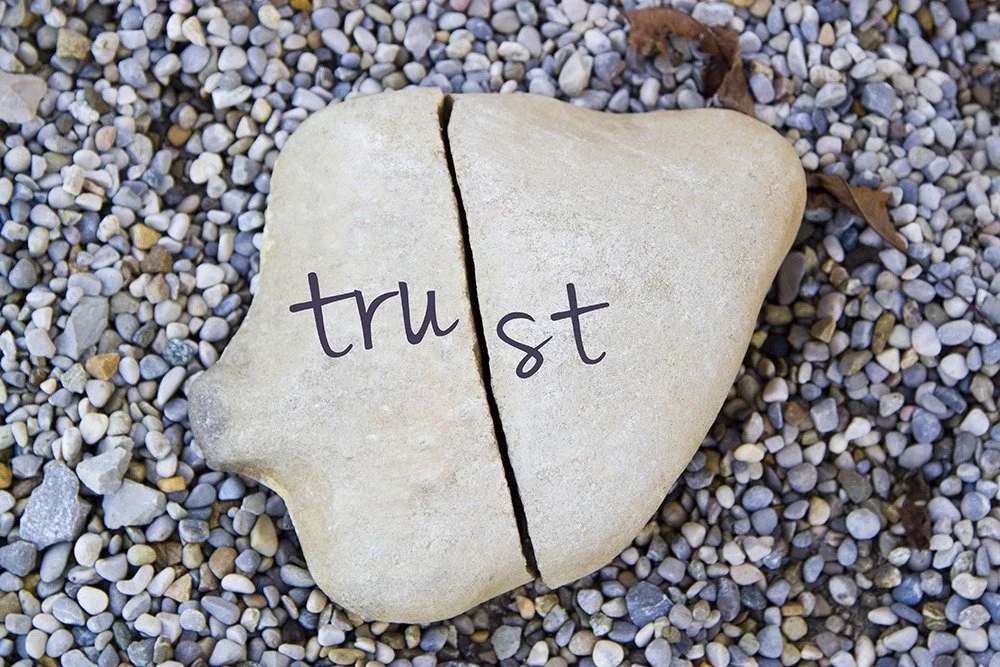
This week we take some time to reflect on the loss of trust, not only in many institutions, but in our communities as well. What I find interesting here is that some scholars see both John the Baptist and Jesus as folks who were weary of temple practices and were seeking to create new ways to worship beyond the temple. After the temple was destroyed, and so many across judea were spiritually and religiously lost, Jesus' teachings became all the more meaningful. So as we acknowledge the loss of some institutions, we can trust in God that there are already new institutions forming in quiet and subtle ways.
If you look back on the pandemic, there was a lot of loss in governmental organizations, particularly within healthcare, as the virus moved faster than the science could keep up and officials did their best to keep up, often offering what appeared to be contradictory information. On top of that, misinformation spread like wildfire, and a loss in trust of established media organizations and news providers allowed for dissemination of that information in a way that often went unchecked. This general distrust has leaked over into schooling and churches as well, both of which have been central pillars of keeping our society on track for centuries. There are still many voids when it comes to trust, and many can feel confused or lost and even angry about the instability that has resulted from the abysses left in the midst of our culture.
Another area was the collapsing together of the institutions of work and home, and the separation that always existed there. Many of us lost track of which was which, and allowed for stressors from one to affect the other, often in destructive ways. We have lost some sense of vocation as well as some sense of true self care, healthy identity and the ability to really relax and restore ourselves. New patterns for work and home life balance are emerging, but much stress still remains.
One thing that was particularly difficult was reaching the limits of resilience. Our contemporary culture places so much effort on being able to care for ourselves and pulling ourselves up by the bootstraps, but many of us hit limits on what we could handle on our own, and the prevailing culture led many of us to feel compounding guilt about our own limits, even though we all have limits and really need our communities when we hit those limits.
And given the isolation of it all, we were not truly able to make meaning of it in a community setting. To this day there is really no singular communal narrative of what we experienced. This has led to fracturing of our communities, the spreading of conspiracy theories, and a general lack of trust of those that may interpret things differently.
There is still a lot of healing that is required, and loss of trust in one of the hardest, yet most important parts of restoring broken communities. For many of us, re-establishing trust across differing narratives of the pandemic will require a humility that is difficult to foster within us, an ability to let go of some of the certainty we hold, and focusing first and foremost on re-establishing bonds of love across the fractures that emerged. This sort of work requires God in our midst, so I encourage us to pray and to open our hearts to the movement of God and to share with God our hurts and our losses and our hopes and our dreams. Doing this with friends and neighbors and loved ones is important for the slow and long process of rebuilding trust and healing fractured communities.
In Peace,
Mike